Cobalt Blue Runs Red
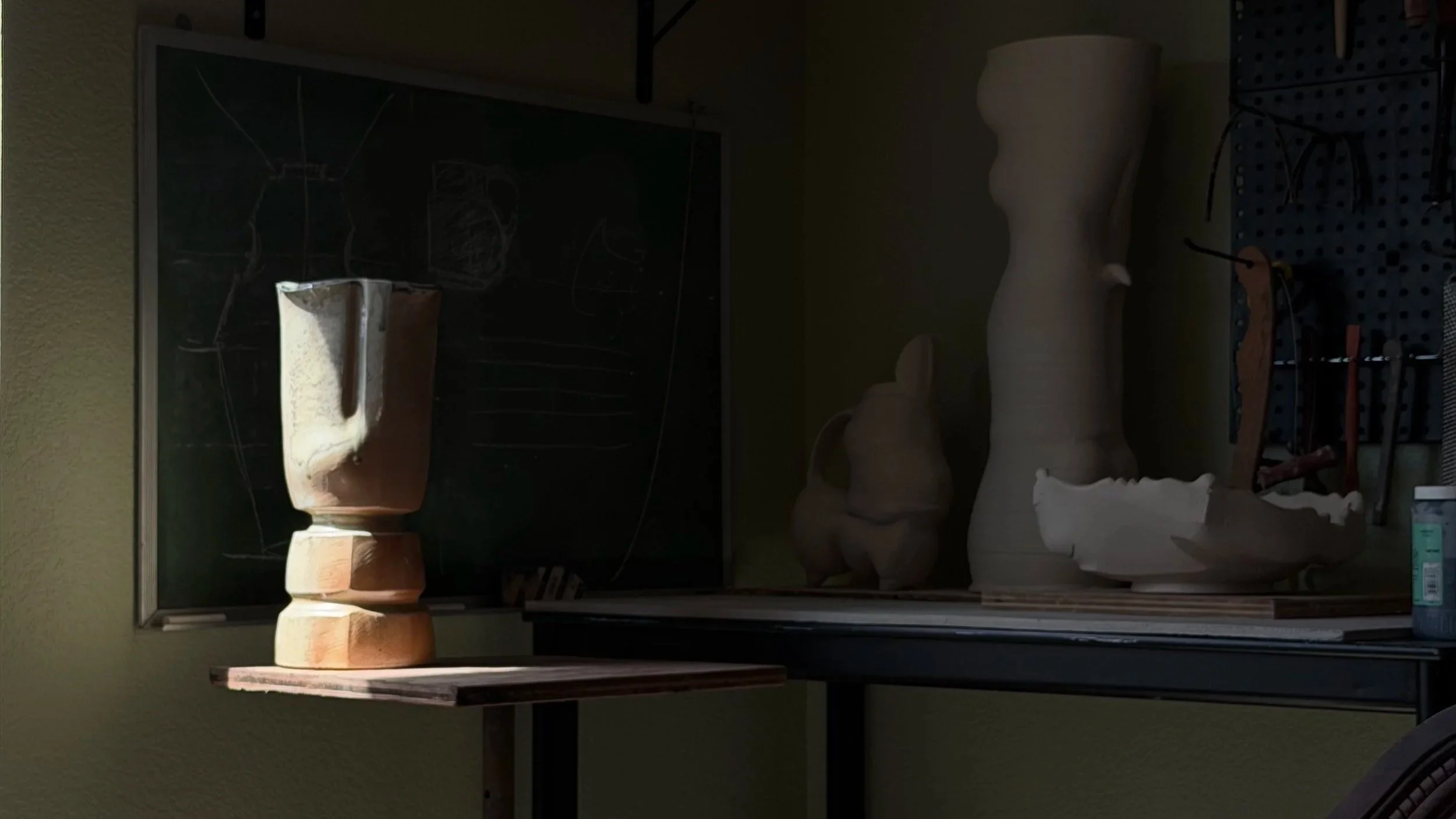
No teaching responsibilities today, so I spent the morning on studio improvement. I eliminated most of the canvas work surfaces and replaced them with 1/2inch cement boards, which is a more durable and lower-dust alternative to canvas. It is a practical change, but not an insignificant one. The studio is always teaching me how much maintenance hides inside routine practice, how infrastructures and environment shape the work before the work even begins to take shape. A table surface, a layer of dust, the amount of friction in cleaning up after each workflow, these things accumulates, become an atmosphere. I wanted the environment to align with the work I am trying to make that carries qualities such as defined edges, direct communications, and long lasting. Cement board has high compressive strength but relatively low tensile strength, that is part of why it feels right also because ceramic also shares that quality.
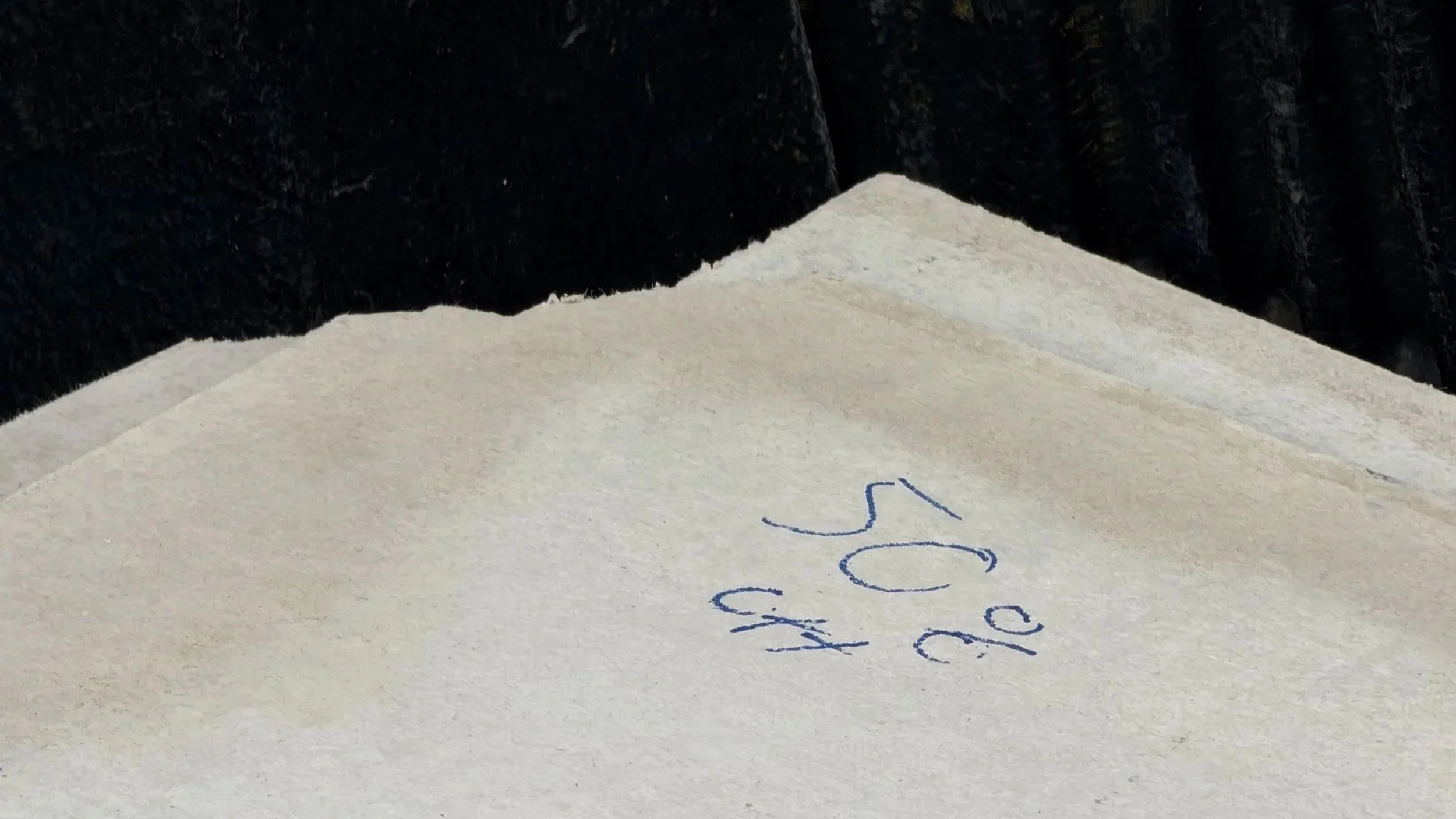
The cost of materials is noticeably more expensive now. A few weeks ago the cement board was at least 15% cheaper than it is today, and pricing change in short span of time feels telling about the age we live in today. The price shift so quickly now. Even the basic acts of upkeep and repair are subject to these fluctuations. I did manage to get a few boards with damaged corners that were marked half off, and I cut them down to the sizes I needed. There was something satisfying in that, in working around damaged goods, or letting damage determine the new dimension. It’s practical, but also quietly aligned with how I often want to work with clay anyway, less invested in ruthlessly pursuing the original vision, vision doesn’t care about gravity, but reality does. I am more interested in adaptation and working with reality, in making use of what is already marked, altered or damaged.
Alongside the physical work of improving the studio, I have been planning out color schemes and thinking through new glazes I want to experiment with once I get the glaze lab set up. That process keeps pulling me into a larger question about the relationship between art practice and earth resources, and the ethics of the materials I use. Ceramics make that question impossible to avoid and to avoid it is an act of intellectual dishonesty or act of willful ignorance. So much of the work depends on extraction, on minerals, oxides, elements pulled from the ground and processed through long chains of labor, trade, and violence that are often kept out of views of the consumers. The beauty of the finished object can become a mask or illusion to easily conceal the histories embedded in its surface.
I have been gradually reducing my reliance on cobalt over the past few years, trying to find the kinds of blue I want without using cobalt at all. It has become harder for me to use cobalt casually, or even to look at cobalt blue innocently. The contemporary realities of cobalt mining, along with the long historical arc of cobalt use stretching back through the Tang dynasty, make the material feel increasingly troubled to me. The color is still beautiful, but that beauty no longer appears clean. It feels stained by blood, by extraction, by brutalism, by the human cost that sits behind the seduction of that particular blue. I can’t separate the hue and richness from that knowledge.
That does not mean I have lost interest in blue completely. If anything, it has made me more intent on searching for it elsewhere. Iron and stains offer some possibilities, and I keep testing their range, watching for the moment when a surface opens into something unexpected. But I have not yet found the hue that truly awes me, the one that gives me the depth or charge that I am chasing. That search is part technical problem, part aesthetic obsession, part ethical negotiation. I am not interested in having a practice grounded in the fantasy of complete innocence. I am more interested in building a practice with as much intentionality as possible in every aspect of the process I can examine, question, and choose. I am not only asking what blue can look like, but what kind of blue I can live with making.
Lithium would be a much harder material to remove completely. It is one of the most effective fluxes, and its usefulness in glaze chemistry makes it difficult to substitute without significant compromise. But it is also the next material I would like to reduce my reliance on.This process is not about purity, because purity is impossible in a practice so materially dependent on extracted resources. It is more about intent, about refusing convenience where I can, about questioning habits that once felt neutral. I want to understand more clearly what my materials ask of the earth and of other people. I want the decisions in the studio to register not only as formal or technical choices, but as ethical ones.
So today felt split in a productive way, part maintenance, part planning, part reckoning. Replacing work surfaces, calculating cost, looking for discounted damaged boards, imagining new glaze tests, thinking about cobalt, thinking about lithium, thinking about what it means to build an art practice out of substances that come from the ground. None of these feel separate to me. The studio is not only a site of making. It is also a site where questions about value, durability, extraction, desire, and responsibility keep surfacing. Even a blue glaze can no longer be just a blue glaze. It arrives carrying a history, and the work now is to decide what I am willing to carry forward, what I am trying to leave behind, and what new forms might emerge from that refusal.