To make pots, or not to make pots, that is the question.
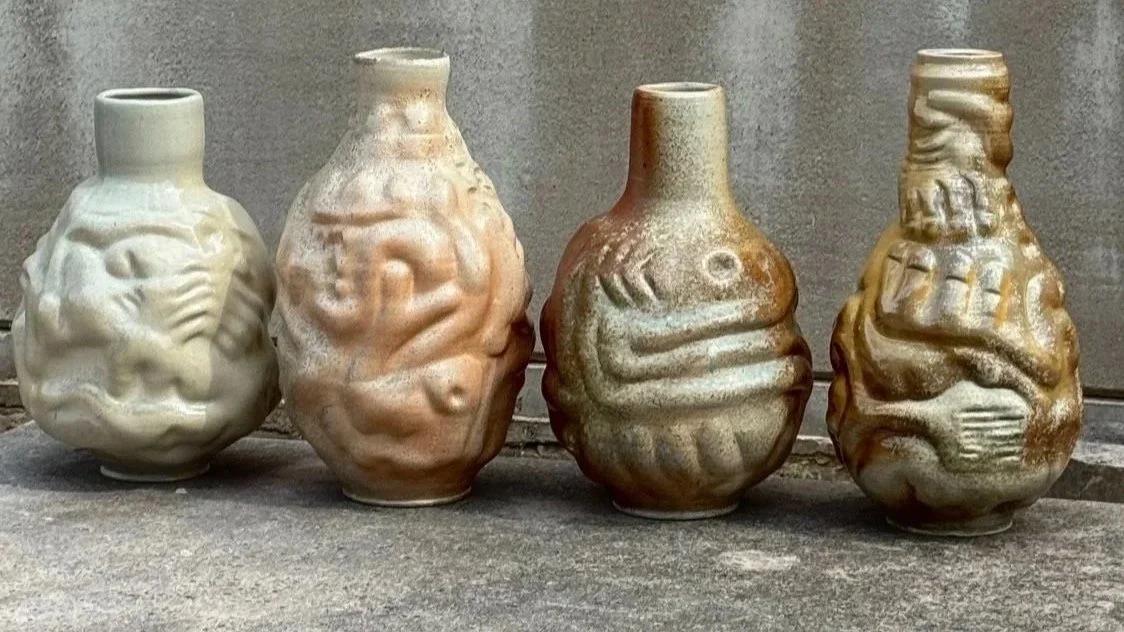
The decision to make a pot already carries a set of assumptions about use, history, and relation. The moment a piece of clay is divided into interior and exterior by the creation of a wall, it enters a long ceramic lineage. It does not enter innocently. The brief, unadulterated state of a pure vessel is immediately burdened by function, by purposefulness, by the memory of function, and by the expectation that form should submit to at least its own ideological usefulness.
A vessel that serves no practical function may exist.
A vessel that serves no aesthetic function may exist.
A vessel that serves no function whatsoever cannot, because vesselness is already a function. Its function is to contain, or at least to invoke the idea of containment. Before a handle is added or withheld, the form is already negotiating with that history.
For me, the question of the handle is never neutral. Adding a handle is not simply a formal adjustment. It is sometimes a forceful declaration and sometimes a calm invitation. A handle suggests function. It invites interaction. It tells the body where to go. It frames a negative space that can either sharpen the form or distract from it. In many historical vessels, the handle is not secondary to the pot. It defines use and directs movement through the world.
With mugs, this decision feels straightforward. Function precedes form, and function validates the object’s existence. A mug asks to be held, lifted, and brought to the lips. It asks the hand to approach in a particular way, often with protection from heat. Its handle completes that logic. It reinforces the mug’s identity and confirms its alignment with the objecthood of a mug.
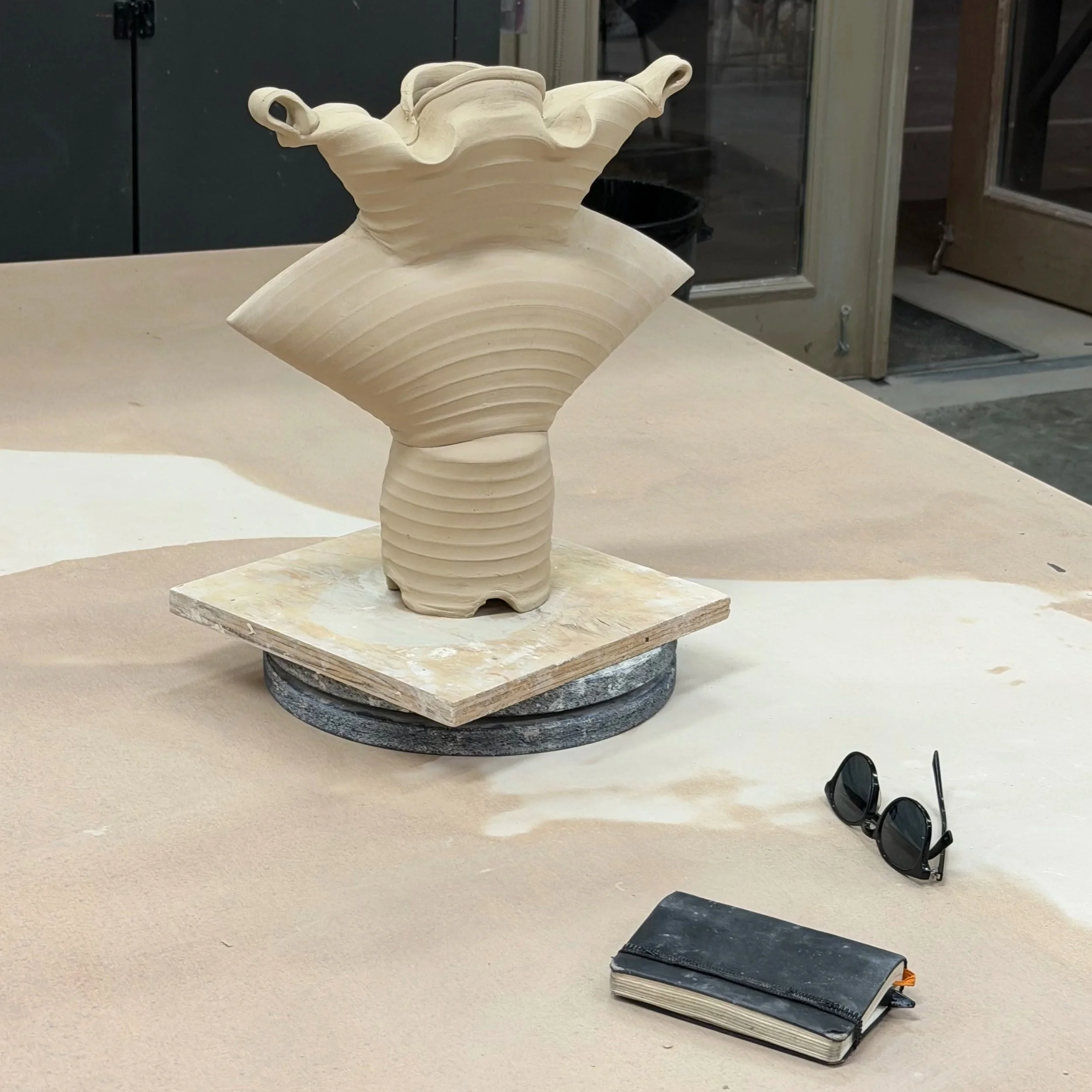
But when a form borderlines between vessel and sculpture, the handle becomes less certain. It can slip easily into ornament. It can perform the illusion of usefulness without actually serving it. It can suggest holding, pouring, and carrying in an object that was never meant to be used in those ways. In such cases, the handle does not clarify the form so much as confuse it, adding a language of utility to a body that resists utility.
This is where ceramic history becomes both useful and difficult. The vessel has long been tied to the hand, to containment, to service, and to ceremony. To leave a handle off can feel like a refusal of that trajectory. It can feel like stepping away from a deeply embedded history of use. But it can also be a way of entering another history, one held not only by human intention but by materials and objects themselves. In that history, touch is not concentrated in an appendage but distributed across the whole body of the form. The tea bowl offers one example. It is not grasped by a handle but received in the hands, its warmth and surface encountered directly. In that case, the absence of a handle is not a lack. It is a different philosophy of contact.
I think about this especially with my larger pieces. I do not move them by a handle. I hug them. That gesture matters to me. A hug is not an act of gripping. It is an act of embracing the body. It meets the form on its own terms. It does not reduce the object to a single point of access. It acknowledges mass, volume, and presence, qualities understood only through intimacy.
So to withhold a handle is not, for me, a rejection of interaction. It is a silent guidance toward embrace. It is a higher fidelity to the entire body of the form rather than to its extremities. It refuses the easy invitation of use where use is no longer the point. Sometimes a handle completes an object. Sometimes it diminishes it. Sometimes it turns a vessel into an illustration of a vessel. But illusion is not truth.
The question, then, is not simply whether a pot needs a handle. The question is what kind of relation the object seeks. Whether it wants to be held, or only remembered as holdable. Whether it belongs to the hand, the eye, or the body.
To make pots, or not to make pots, to be made by pots, to handle or not to handle, these are not only questions of pottery. They are philosophical questions about relation, about how we shape objects, and how objects in turn shape us.